
Disclaimer: This post may include affiliate links. If you click one of these links, we may receive a small commission at no extra cost.
Ready to unlock Spanish fluency through speaking practice? This guide is designed for Spanish learners who understand basics but struggle when it comes to actually speaking with confidence. Many students can read and understand Spanish well but freeze up during real conversations with native speakers.
Speaking Spanish regularly is your fastest path to fluency, but it requires the right approach. You’ll discover how to find your internal motivation for learning, adopt effective listening strategies that mirror how children naturally acquire language, and develop confidence in your Spanish-speaking voice. We’ll also cover proven techniques like speech shadowing and paraphrasing that turn passive knowledge into active speaking skills.
The key is consistent practice combined with smart methods that make speaking feel natural rather than intimidating. Let’s explore five practical ways to transform your Spanish speaking abilities and achieve the fluency you’ve been working toward.
There are eight ways how speaking Spanish leads to fluency. See now, how they impact the actions of a person mastering Spanish and achieving articulation in the language.
The first way how speaking Spanish leads to fluency is by discovering your internal motivation for learning the language.

Examine Whether Your Desire Comes from Personal Interest or External Pressure
The foundation of successful Spanish learning begins with honest self-reflection about your motivations. Take time to examine whether your desire to learn Spanish stems from genuine personal interest or external pressures such as parental expectations, academic requirements, or guilt from previously unmet language learning goals.
Intrinsic motivations—those that come from within—create a fundamentally different learning experience than external pressures. When your motivation is internally driven, you’ll naturally find yourself enjoying the learning process rather than viewing it as a burden or obligation. This enjoyment becomes a powerful catalyst that sustains you through challenging moments and accelerates your progress toward fluency.
Connect with Specific Aspects of Spanish Culture That Inspire You
To fuel your desire for Spanish fluency, identify and connect with specific elements of Spanish-speaking cultures that genuinely captivate you. Whether it’s the rhythmic passion of flamenco music, the warmth of Spanish-speaking communities, the rich artistic traditions spanning from Picasso to contemporary Latin American artists, or the diverse culinary landscape from tapas to authentic Mexican cuisine, finding your cultural anchor points creates lasting motivation.
These cultural connections serve as emotional touchstones that remind you why you’re investing time and energy in language acquisition. When grammar feels overwhelming or pronunciation seems impossible, remembering your love for Spanish guitar music or your fascination with Latin American literature can reignite your enthusiasm and commitment.
View Language Learning as a Gateway to Meaningful Cultural Connections
Understanding Spanish as more than just vocabulary and grammar rules transforms your entire learning approach. Language serves as a vehicle for opening doors and creating meaningful connections that add genuine value to your life. When you “fall in love” with the culture, music, sights, sounds, history, and vibrancy of the Spanish-speaking world, the technical aspects of language learning naturally fall into place.
This perspective shift—from viewing Spanish as an academic subject to embracing it as a bridge to rich cultural experiences—ensures that your learning journey remains purposeful and personally fulfilling throughout your path to fluency.
The second way how speaking Spanish leads to fluency is from adopting a child-like learning approach.

Accept the natural listening stage before speaking fluency develops
Now that we have covered the importance of discovering your internal motivation, it’s crucial to understand that language acquisition follows a predictable pattern that mirrors how children learn their first language. The initial phase of Spanish learning involves a natural listening stage where your comprehension will significantly exceed your speaking ability. This phenomenon is completely normal and should be embraced rather than fought against.
During this critical phase, you’ll find yourself understanding far more Spanish than you can actively produce in conversation. This comprehension-first approach reduces the frustration that many adult learners experience when they expect to speak as well as they understand. By accepting this natural progression, you eliminate the pressure to perform perfectly from the beginning and instead focus on building a solid foundation of understanding.
The listening stage serves as the bedrock for future speaking fluency. Your brain is actively processing patterns, intonation, rhythm, and vocabulary even when you’re not consciously aware of it. This passive absorption creates the neural pathways necessary for eventual speech production.
Use context-rich materials like music, movies, and children’s books
With this understanding of the natural learning progression in mind, the next step involves selecting materials that provide rich contextual clues to support comprehension. Context-rich materials serve as powerful tools that accelerate Spanish acquisition by providing multiple layers of meaning beyond just words.
Music, particularly nursery rhymes, offers an excellent starting point because the repetitive nature and melodic patterns make vocabulary and pronunciation more memorable. The rhythm and rhyme schemes create natural memory hooks that help embed Spanish sounds and structures in your mind.
Cartoon shows and movies provide visual context that supports understanding even when you don’t catch every word. The combination of facial expressions, gestures, and situational context allows you to infer meaning and gradually build vocabulary organically. These materials expose you to natural speech patterns, colloquialisms, and cultural nuances that textbooks often miss.
Children’s books represent another invaluable resource because they use simple sentence structures while still conveying complete ideas. The illustrations provide visual support for comprehension, and the vocabulary is fundamental yet practical for everyday communication.
Talk radio exposes you to authentic conversational Spanish, helping you develop an ear for natural speech rhythms and pronunciation variations across different regions.
Practice real-world conversations despite imperfect pronunciation
Previously, I’ve emphasized the importance of input-heavy learning, but the child-like approach also requires brave engagement with real-world conversations. Native Spanish speakers consistently appreciate learners’ efforts to communicate, even when pronunciation or syntax remains imperfect.
This willingness to engage despite imperfections mirrors how children fearlessly attempt communication before mastering all grammatical rules. They prioritize meaning over perfection, focusing on getting their message across rather than achieving flawless delivery.
Real-world conversations provide immediate feedback and authentic practice opportunities that no textbook can replicate. These interactions teach you to navigate misunderstandings, ask for clarification, and develop the confidence necessary for ongoing improvement. The key lies in embracing the learning process rather than avoiding it due to fear of making mistakes.
The third way how speaking Spanish leads to fluency is by maximizing your input through strategic listening.

Engage in both passive and active listening techniques
Listening serves as the foundation for developing Spanish speaking fluency, as it provides your brain with the essential information needed to understand and replicate natural speech patterns. To maximize your learning potential, you should incorporate both passive and active listening strategies into your daily routine.
Passive listening involves exposing yourself to Spanish audio while engaging in other activities such as doing dishes, driving, or completing household tasks. This approach helps you become accustomed to the natural sounds, rhythms, and intonation patterns of the Spanish language. Even when you’re not actively concentrating on understanding every word, your brain continuously processes the linguistic input, gradually building familiarity with how Spanish naturally flows.
Active listening requires your focused attention and deliberate effort to understand words, phrases, and meanings. During active listening sessions, dedicate your full concentration to comprehending the content rather than multitasking. This intentional approach accelerates your ability to recognize vocabulary, grammatical structures, and contextual clues that enhance overall comprehension.
Focus on understanding lyrics, dialogue, and natural speech patterns
Now that we understand the importance of different listening approaches, let’s explore specific content types that maximize your exposure to authentic Spanish. Target materials that showcase natural speech patterns found in music, movies, talk shows, podcasts, and news programs.
Songs provide excellent opportunities to understand the rhythm and flow of Spanish while exposing you to colloquial expressions and cultural references. Focus on deciphering lyrics and analyzing how native speakers naturally connect words and phrases in melodic contexts.
Movies and television shows offer authentic dialogue that reflects real conversational patterns, including interruptions, incomplete sentences, and emotional expressions that textbooks rarely capture. Talk shows and podcasts present spontaneous conversations with natural hesitations, corrections, and informal language usage.
News programs deliver formal Spanish with clear pronunciation and structured presentations, helping you understand more standardized speech patterns while expanding your vocabulary with current events and specialized terminology.
Use Spanish subtitles and audio materials to improve comprehension
With this foundation of diverse listening materials, enhance your comprehension by strategically using Spanish subtitles when watching movies and reading along with song lyrics. This dual-input approach allows you to simultaneously process audio and visual information, strengthening the connection between spoken and written Spanish.
Reading lyrics while listening to songs helps you decipher challenging phrases and analyze how written Spanish translates into natural pronunciation. Practice singing along to memorized songs to internalize the language’s natural rhythm and flow patterns.
Spanish subtitles provide visual reinforcement for dialogue, helping you recognize words you might miss in rapid speech while building your reading skills simultaneously.
The fourth way how speaking Spanish leads to fluency is from developing comfort with your Spanish-speaking voice.
Record yourself speaking to become familiar with your accent
Recording yourself speaking Spanish serves as one of the most effective tools for developing vocal confidence in your target language. When you capture your voice on audio or video, you gain objective insight into how you actually sound rather than how you think you sound. This practice helps you identify specific pronunciation challenges that might otherwise go unnoticed during regular conversation or study sessions.
Start by reading simple Spanish texts aloud while recording, then progress to spontaneous speaking exercises. Listen back to these recordings with a critical but constructive ear, noting areas where your pronunciation differs from native speakers. Pay particular attention to vowel sounds, rolled R’s, and consonant clusters that don’t exist in English. This self-awareness becomes the foundation for targeted improvement and builds the familiarity you need to speak with greater confidence.
Practice talking to yourself in Spanish daily
Daily self-conversation in Spanish represents a low-pressure environment where you can experiment with the language without fear of judgment. Whether you’re at home, in the shower, or taking a walk, speaking aloud to yourself allows you to become comfortable with producing Spanish sounds and using your voice in this new linguistic context.
Make this practice intentional by narrating your daily activities, expressing opinions about current events, or simply describing your surroundings in Spanish. The key lies in speaking out loud rather than just thinking in Spanish, as vocalization engages different neural pathways and muscle memory. This consistent vocal practice helps you develop fluency in the physical act of speaking Spanish, making real conversations feel more natural when they occur.
Accept that you may develop a different personality in Spanish
Language learning often involves more than just acquiring new vocabulary and grammar rules—it can fundamentally influence how you express yourself and even how you perceive your own identity. When speaking Spanish, you might notice that your voice takes on different qualities, your gestures change, or your overall demeanor shifts in subtle but noticeable ways.
This phenomenon occurs naturally as you absorb the cultural nuances embedded within the Spanish language and adapt to its rhythmic and melodic patterns. Rather than resisting this change, embrace it as a normal and enriching part of the language learning journey. Your Spanish-speaking persona represents an expansion of your identity, influenced by the unique experiences, media, and interactions you encounter while learning the language. This linguistic personality development actually indicates deep language acquisition and cultural integration, marking significant progress in your journey toward fluency.
The fifth way how speaking Spanish leads to fluency is by mastering imitation and speech shadowing techniques.
Listen to native speakers and repeat their phrases immediately
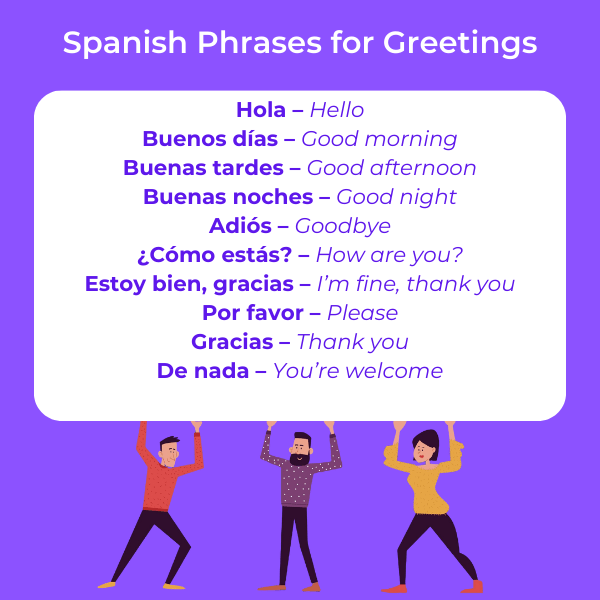
Imitation through speech shadowing represents one of the most powerful techniques for developing authentic Spanish pronunciation and natural speech patterns. This method involves listening to native Spanish speakers and immediately repeating what you hear, creating a real-time echo that trains your mouth, tongue, and vocal cords to produce genuine Spanish sounds.
The key to effective speech shadowing lies in the immediate repetition of phrases. When you hear a native speaker say something, pause the audio and repeat the exact phrase with the same intonation, stress, and rhythm. This immediate repetition helps your brain form direct connections between the sounds you hear and the movements required to produce them. Regular practice of this technique allows you to internalize authentic Spanish expressions that native speakers use in their daily conversations.
Focus on natural speech from movies and podcasts rather than textbooks
The source of your listening material makes a crucial difference in developing authentic Spanish fluency. Movies and podcasts provide access to natural speech patterns that reflect how Spanish is actually spoken in real-world situations. Unlike textbook recordings, which often feature overly clear and artificially slow pronunciation, these authentic materials expose you to the natural flow, contractions, and colloquialisms that characterize genuine Spanish conversation.
Native Spanish speakers in movies and podcasts use suitable accents and authentic pronunciation that you won’t find in traditional educational materials. This exposure helps you develop an ear for regional variations, cultural expressions, and the natural cadence of spoken Spanish. By focusing on these authentic sources, you train yourself to understand and reproduce the Spanish that native speakers actually use in their daily lives.
Practice the rhythm and flow of authentic Spanish conversations
The rhythm and flow of Spanish differ significantly from English, and mastering these elements is essential for achieving natural-sounding speech. Through consistent speech shadowing practice, you learn to match the natural rhythm patterns that characterize authentic Spanish conversations. This includes understanding where stress falls in sentences, how words connect and blend together, and the overall musical quality of spoken Spanish.
Regular practice with authentic materials helps you internalize the natural flow that makes Spanish conversations sound effortless and native-like. Pay attention to how native speakers link words together, where they pause for breath, and how their intonation rises and falls throughout sentences. This rhythmic mastery transforms robotic, textbook Spanish into fluid, natural communication that sounds genuinely conversational.
The sixth way how speaking Spanish leads to fluency is from the Practice paraphrasing to solidify understanding.

Summarize Spanish movies or content for friends after watching
After consuming Spanish content, whether it’s a captivating film, an engaging documentary, or an entertaining series, the practice of summarizing what you’ve watched for friends becomes a powerful tool for language reinforcement. This technique transforms passive consumption into active language production, forcing your brain to process and reorganize the Spanish input you’ve received into coherent, expressible thoughts.
When you attempt to retell a Spanish movie’s plot to a friend, you’re essentially exercising your ability to extract key information, understand narrative structure, and communicate complex ideas in Spanish. This process solidifies your comprehension by requiring you to demonstrate that you truly understood the content beyond just hearing the words. The act of paraphrasing helps cement vocabulary, phrases, and cultural contexts that you encountered during viewing.
Focus on storytelling rather than perfect grammar
The beauty of paraphrasing practice lies in its emphasis on communication over perfection. Rather than becoming paralyzed by concerns about grammatical accuracy or specific vocabulary choices, this approach encourages you to prioritize the natural flow of storytelling. When recounting a Spanish film’s narrative, your primary goal should be conveying the essence of the story, the emotions of the characters, and the progression of events.
This storytelling focus allows your brain to organize ideas in Spanish more organically. Instead of translating word-for-word from your native language, you begin to think in Spanish narrative structures. You learn to express concepts using the vocabulary and phrases you actually know, rather than struggling to find perfect translations for complex ideas. This practice develops your ability to work within your current Spanish abilities while gradually expanding them.
Build confidence in expressing ideas naturally in Spanish
Through consistent paraphrasing practice, you develop the confidence to speak freely in Spanish without the constant fear of making mistakes. Each time you successfully communicate the plot of a Spanish movie or the main points of content you’ve consumed, you prove to yourself that you can express complex ideas in your target language.
This confidence-building aspect is crucial because it helps your brain organize ideas in Spanish rather than defaulting to your native language as an intermediary. As you become more comfortable with paraphrasing, you’ll notice that your Spanish expression becomes more fluid and natural. The practice helps you move beyond rigid, textbook-style communication toward more authentic, conversational Spanish that reflects how native speakers actually tell stories and share experiences.
The seventh way how speaking Spanish leads to fluency is by embracing mistakes as learning opportunities.
Accept that errors are essential parts of the fluency journey
When pursuing Spanish fluency, one of the most transformative mindset shifts involves accepting that making mistakes is not only inevitable but absolutely essential for progress. Fluency is fundamentally about natural expression and communication effectiveness, not achieving perfection in every utterance. This distinction is crucial because it liberates learners from the paralyzing fear of making errors that often prevents them from speaking altogether.
The journey toward fluency requires countless opportunities to experiment with the language, test new vocabulary, and attempt complex grammatical structures. Each mistake represents a learning moment where your brain processes feedback and adjusts future language production. Without these errors, your Spanish would remain static and underdeveloped. Think of mistakes as stepping stones rather than stumbling blocks—each one brings you closer to more natural and confident expression.
Welcome corrections from native speakers as valuable feedback
Native Spanish speakers who correct your language use are offering you an invaluable gift: real-time feedback that accelerates your learning process. While receiving corrections might feel awkward or embarrassing in the moment, these interactions provide insights that textbooks and apps simply cannot match. Native speakers intuitively understand the nuances of natural expression, colloquialisms, and cultural context that make your Spanish sound authentic.
When someone takes the time to correct your pronunciation, grammar, or word choice, they’re investing in your success. This feedback helps you identify specific areas for improvement and creates memorable learning experiences. The slight awkwardness you might feel during these corrections pales in comparison to the long-term benefits of speaking more accurately and naturally. Embrace these moments as opportunities to refine your Spanish and demonstrate your commitment to improvement.
Remember that even native speakers make mistakes regularly
Perhaps the most liberating realization for Spanish learners is understanding that native speakers themselves make mistakes regularly in their own language. They might stumble over words, use incorrect grammar in casual speech, or search for the right expression during conversations. This reality should eliminate any shame or embarrassment you feel about your own errors.
Native speakers often engage in self-correction during natural conversation, restart sentences when they lose their train of thought, or use filler words while organizing their ideas. These imperfections are normal aspects of human communication, not signs of language deficiency. Recognizing this helps you develop a healthier relationship with mistakes and reduces the unrealistic pressure to speak flawlessly from the beginning of your Spanish journey.
The eighth way how speaking Spanish leads to fluency is by the commitment to consistent practice and immersion.

Dedicate regular time to Spanish study and conversation
Now that we have covered various techniques for developing your Spanish-speaking abilities, the foundation of all these methods lies in establishing a consistent practice routine. Learning Spanish requires unwavering commitment, study, practice, repetition, and consistent effort across all aspects of the language. Without regular dedication to both formal study and conversational practice, even the most effective techniques will yield limited results.
The key to building fluency lies in treating Spanish learning as a daily habit rather than an occasional activity. This means setting aside dedicated time each day for structured study, whether it’s grammar review, vocabulary building, or pronunciation practice. Equally important is incorporating regular conversation practice into your routine, as this bridges the gap between theoretical knowledge and practical application. The combination of systematic study and real-world conversation practice creates a comprehensive learning environment that accelerates your progress toward fluency.
Practice makes perfect, and get your Spanish communication going right away. Get this support now!
Seek extended stays in Spanish-speaking countries when possible
With this foundation of consistent practice in mind, the most transformative step you can take is to seek extended stays or participate in immersion programs in Spanish-speaking countries. Living and using the language daily represents the number one way to achieve fluency, as it provides constant exposure and necessity for communication in Spanish.
During extended stays, Spanish becomes your primary means of communication for everyday tasks, from ordering food to navigating public transportation. This intensive exposure accelerates learning in ways that classroom study alone cannot match. The ultimate indicator of this deep linguistic connection occurs when you begin dreaming in Spanish, demonstrating that the language has truly become integrated into your subconscious mind.
Create immersive experiences through media and social interactions
Previously, we’ve discussed the importance of formal study and travel opportunities, but creating immersive experiences at home is equally crucial for sustained progress. Do not learn in isolation; instead, actively get out and practice, speak, listen, and engage with other Spanish speakers to create meaningful, immersive experiences in your daily life.
This involves deliberately seeking opportunities to use Spanish through media consumption, social interactions, and community engagement. Whether through Spanish-language films, podcasts, local conversation groups, or online communities, these interactions provide essential practice opportunities that complement your formal study routine.
In conclusion, eight ways in which speaking Spanish leads to fluency stem from consistent daily conversation practice and effective study of vocabulary usage in context.
Achieving Spanish fluency through speaking is a journey that requires patience, consistency, and the right mindset. By discovering your internal motivation, adopting a child-like approach to learning, maximizing input through strategic listening, and getting comfortable with your Spanish-speaking voice, you create a solid foundation for language acquisition. Remember that imitation, paraphrasing, and embracing mistakes are not setbacks but essential stepping stones toward fluency.
Language provides a platform through which we can connect, understand, and engage with others on a deeper level. As you commit to consistent practice and immersion, remember that fluency doesn’t happen overnight—it takes dedicated effort and training. Every conversation, every mistake, and every moment of practice brings you closer to confidently expressing yourself in Spanish. Embrace the process, stay curious like a child, and trust that your efforts will pay off as you unlock the doors that Spanish fluency can open in your life.
After reading this interesting blog post, I know you learned so much helpful information you can use on your journey toward Spanish mastery. As a token of appreciation, I will personally give you a free copy of my e-book, “Mastering Spanish Conversations.” Click the link below to instantly download your copy of the book!

Click here right now for the e-book: “Mastering Spanish Conversations”
Don’t forget to comment and share this blog post on your social media accounts!
If you are new to my blog, please feel free to check out the other recent posts.
