

5 Ways A Spanish Language Course Helps You Learn Faster

Disclaimer: This post may include affiliate links. If you click one of these links, we may receive a small commission at no extra cost.
Learning Spanish can feel overwhelming when you’re juggling work, family, and other commitments. A Spanish language course gives you the structure and proven methods to cut through the confusion and make real progress faster than studying on your own.
This guide is for busy adults who want to learn Spanish efficiently without wasting time on ineffective study methods. We’ll show you exactly how a structured Spanish language course accelerates your learning through smart pronunciation training that builds listening skills from day one, strategic vocabulary focus that teaches you the words you’ll actually use in conversations, and immediate speaking practice that gets you talking from your first lesson.
Stop spinning your wheels with random apps and YouTube videos. These five course-based strategies will get you speaking Spanish with confidence in less time than you thought possible.

The first way a Spanish Language course helps you learn faster is by mastering Spanish Pronunciation and Sound Patterns.
Learn the five pure vowel sounds for clearer communication
Spanish pronunciation begins with mastering the five pure vowel sounds: A, E, I, O, and U. Unlike English, where vowel sounds can vary dramatically depending on context, Spanish vowels are remarkably consistent and crisp. Each vowel maintains the same pronunciation regardless of its position in a word or the letters surrounding it. The ‘A’ sounds like the ‘a’ in “father,” ‘E’ like the ‘e’ in “bet,” ‘I’ like the ‘ee’ in “feet,” ‘O’ like the ‘o’ in “boat,” and ‘U’ like the ‘oo’ in “boot.” This consistency makes Spanish sounds predictable and learnable, providing a solid foundation for accurate pronunciation from the very beginning of your language journey.
Practice phonetics through shadowing and mimicking native speakers
Now that we understand the vowel foundation, the next crucial step involves active phonetic practice using online videos of native speakers. This approach allows you to hear authentic pronunciation patterns and develop your ear for Spanish sounds. Recording yourself speaking provides immediate feedback, enabling you to compare your pronunciation with native models and identify areas for improvement.
Shadowing techniques prove particularly effective for developing natural speech patterns. This method involves mimicking the rhythm, intonation, and flow of native speakers in real-time, focusing on the musical quality of the language rather than getting caught up in individual word pronunciation. Through consistent shadowing practice, you develop an intuitive sense of Spanish phonetic patterns.
Focus on rhythm and intonation over individual words
With this foundation in mind, understanding specific sound differences becomes essential for comprehension and communication. The rolled ‘R’ (RR) and the soft ‘B’ sound (similar to ‘V’) exemplify how mastering these distinctions improves listening comprehension significantly. These phonetic differences help you distinguish between similar words and recognize recurring patterns in Spanish speech, making your overall learning process more efficient and effective.
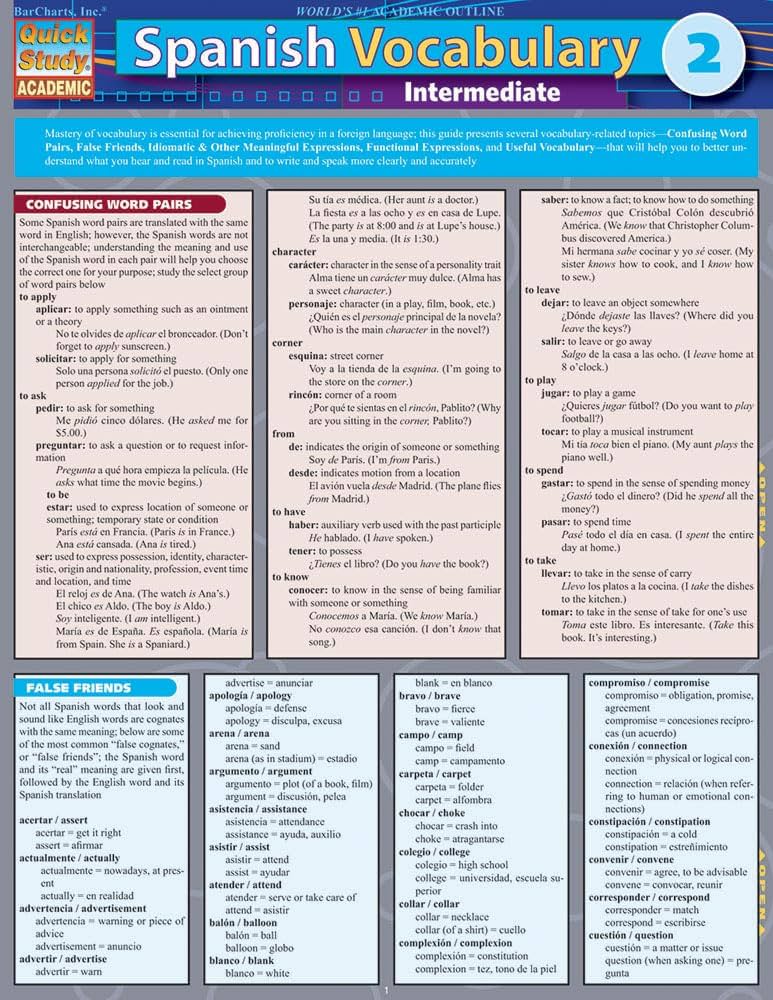
The second way a Spanish Language course helps you learn faster is through prioritizing high-frequency vocabulary over random word lists.
Master the top 1,000 most common Spanish words
Now that we have covered the importance of pronunciation and sound patterns, let’s explore how strategic vocabulary selection dramatically accelerates your Spanish learning journey. Studies indicate that the top 1,000 most common Spanish words cover over 80% of daily conversation, making this focused approach far more effective than traditional textbook methods.
Rather than following thematic vocabulary lists found in conventional textbooks, which can be inefficient and disconnected from real-world usage, structured Spanish language courses prioritize high-frequency words that you’ll actually encounter in everyday situations. This strategic approach means you’ll be able to understand and participate in conversations much sooner than if you spent time memorizing random word collections.
Focus on connector words and essential verbs in present tense
With this foundation in mind, successful Spanish courses emphasize mastering the top 100 verbs, teaching them primarily in the present tense to enable you to communicate most ideas effectively. This present-tense focus allows you to express yourself immediately rather than getting bogged down in complex conjugation patterns during your initial learning phase.
Equally important are “connector” words such as prepositions and conjunctions – words like “but,” “so,” “to have,” “to be,” “more,” and “because.” These words act as the essential “glue” for sentences, enabling you to link ideas and create meaningful communication even with a limited vocabulary base. Without these connectors, your Spanish would sound choppy and disconnected.
Use frequency lists to maximize learning efficiency
Previously, language learners often relied on alphabetical dictionaries or random vocabulary exercises, but modern Spanish courses use frequency lists to efficiently guide vocabulary acquisition towards actual communication rather than mere memorization. These scientifically compiled lists ensure that every word you learn serves a practical purpose in real conversations, maximizing your return on your study time investment.

The third way a Spanish Language course helps you learn faster is by immersing yourself in comprehensible input daily.
Choose materials where you understand 70-90% of the content
The key to accelerating your Spanish learning lies in selecting materials that hit the sweet spot of comprehension. When you choose content where you understand approximately 70-90% of what you’re hearing or reading, you’re creating the perfect conditions for your brain to naturally absorb new patterns and vocabulary. This range ensures you’re not overwhelmed by unfamiliar content, yet you’re consistently challenged with new elements slightly beyond your current level.
Your brain learns most effectively when it can use existing knowledge as scaffolding to understand new information. When you comprehend most of the content, the unknown elements become puzzle pieces that your mind can naturally piece together through context clues and pattern recognition. This process mirrors how children acquire their first language – through exposure to slightly more complex language than they currently produce.
Use learner-appropriate podcasts and simple Spanish media
Now that we understand the importance of comprehensible input, let’s explore specific media choices that optimize your learning experience. Learner-appropriate resources such as “Spanish podcasts for intermediate beginners” are specifically designed to provide simple grammar structures perfect for acquisition. These materials use controlled vocabulary and clear pronunciation, making them ideal stepping stones in your language journey.
Children’s shows in Spanish represent another powerful resource for language learners. While they might seem too basic, these programs offer carefully structured language with repetitive patterns, clear pronunciation, and visual context clues that support comprehension. The simple grammar used in children’s media provides an excellent foundation for understanding more complex Spanish structures later.
Listen to Spanish music while reading lyrics for pattern recognition
With this foundation in place, incorporating Spanish music into your daily routine creates an additional layer of immersive learning. When you actively listen to Spanish songs while reading the lyrics, you’re engaging multiple learning pathways simultaneously. This combination builds intuition for the language’s natural rhythm and helps you recognize grammatical patterns in an enjoyable, memorable context.
The goal is to accumulate hundreds of hours of this type of listening experience. By integrating Spanish-language songs, shows, films, books, podcasts, stories, poetry, and articles into your daily routine, you enhance your familiarity with Spanish rhythm and cadence. This consistent exposure helps your brain internalize the natural flow of the language, making speaking and comprehension feel more intuitive over time.

The fourth way a Spanish Language course helps you learn faster is by creating a Spanish environment in your daily life.
Change Device Language Settings to Spanish
Now that we’ve covered the importance of comprehensible input, creating an immersion environment at home becomes the next crucial step to ensure constant, gentle exposure to the language. One of the most effective ways to trick your brain into believing that Spanish is necessary for daily life is to change your phone, social media, and email language settings to Spanish.
This simple adjustment turns your most-used devices into Spanish-learning tools. Every time you check your phone, navigate through apps, or read notifications, you’ll naturally encounter useful vocabulary words like “enviar” (send) or “configuración” (settings). These are practical, high-frequency terms that you’ll use repeatedly in real-world Spanish conversations. The constant exposure helps reinforce vocabulary retention without requiring dedicated study time.
Label Household Items with Spanish Sticky Notes
Previously, we’ve established that consistent exposure accelerates learning. Taking this principle further, labeling household items with Spanish sticky notes creates an immersive environment within your living space. Strategic placement of labels on common objects like “refrigerador” or “espejo” (mirror) transforms your home into a Spanish classroom.
This visual learning technique works because you encounter these labels multiple times throughout your day during routine activities. Each glance at a labeled item reinforces the Spanish vocabulary, creating automatic associations between objects and their Spanish names. The passive nature of this method means you’re learning even when you’re not actively studying.
Watch Familiar Movies with Spanish Audio and Subtitles
With this in mind, next, we’ll see how entertainment can become a powerful learning tool. Watching your favorite or familiar movies using Spanish audio and Spanish subtitles creates a unique learning opportunity that connects the spoken sound to the written word. The familiarity with the plot allows you to focus on language patterns rather than struggling to understand the story.
This approach provides authentic pronunciation examples while reinforcing reading comprehension. Since you already know what’s happening in familiar movies, you can dedicate mental energy to absorbing Spanish dialogue patterns, intonation, and vocabulary in context.

The fifth way a Spanish Language course helps you learn faster is by having you start speaking Spanish from day one.
Practice Self-Narration Throughout Your Daily Activities
One of the most effective techniques for developing Spanish fluency is incorporating self-narration into your everyday routine. This practice involves describing your actions and thoughts in Spanish as you go through your daily activities. For example, when making your morning coffee, you might say “Ahora, preparo café” (Now, I make coffee), or when checking your emails, you could verbalize “Tengo que leer mis correos” (I have to read my emails).
This approach transforms ordinary moments into valuable learning opportunities, allowing you to practice Spanish vocabulary and sentence structures in real-world contexts. The beauty of self-narration lies in its accessibility – you can practice anytime, anywhere, without needing a conversation partner or formal study session.
Build Confidence Through Private Speaking Sessions
Now that we understand the power of self-narration, let’s explore how private speaking sessions can accelerate your progress. Building confidence through speaking to yourself is a crucial stepping stone before engaging in conversations with others. These private sessions create a safe space where you can experiment with pronunciation, grammar, and vocabulary without fear of judgment.
When you encounter a word you don’t know during these sessions, the key is to look it up immediately and then repeat the full sentence. This practice reinforces both the new vocabulary and the sentence structure, helping cement the learning in your memory. Speaking to yourself regularly helps overcome the initial hesitation that many language learners experience when transitioning from understanding Spanish to actually producing it.
Transform Passive Grammar Knowledge Into Active Speaking Skills
With consistent self-narration and private speaking practice established, the next crucial step involves converting your theoretical knowledge into practical communication abilities. Many students can understand Spanish grammar rules and recognize vocabulary when reading or listening, but struggle to use these elements when speaking. The solution lies in treating Spanish primarily as a form of communication rather than just a subject of study.
This transformation occurs when you actively apply grammar rules in real-time speech rather than simply memorizing conjugation tables or sentence patterns. By speaking from day one, you develop the muscle memory necessary for fluent speech – recognizing that speaking is fundamentally a physical skill that requires practice to develop properly.
To enhance this process, practice repeating phrases in front of a mirror, to friends, family, or even pets. Recording yourself provides additional benefits, allowing you to identify pronunciation issues and track your progress over time. This multi-faceted approach ensures that your passive knowledge becomes active, usable skills that serve you in real conversations.
A well-structured Spanish language course accelerates your learning by focusing on the fundamentals that matter most. From mastering pronunciation and sound patterns to prioritizing high-frequency vocabulary, these courses eliminate the guesswork and guide you toward fluency more efficiently. By incorporating daily comprehensible input, creating an immersive Spanish environment, and encouraging you to speak from day one, structured learning provides the roadmap while giving you the tools to practice actively.
Conclusion
The key to learning Spanish faster isn’t just about studying harder—it’s about studying smarter. These five strategies work together to transform how your brain processes and retains language, moving you from passive knowledge to active communication skills. If you’re ready to experience rapid progress in your Spanish journey, consider enrolling in a quality Spanish course that implements these proven methods and start speaking with confidence today.
Today, I want to help you excel at mastering Spanish communication. Many people often have difficulty speaking and understanding Spanish. For a sense of support, I have a free e-book for you to read that shares effective tips, strategies, and methods for communicating verbally in Spanish and English.

Click here right now to get your copy: “Mastering Spanish Conversations.”
Don’t forget to comment and share this blog post on your social media accounts!
If you are new to my blog, please feel free to check out the other recent posts.
